Monday, 30 September 2019

The SAHM Series: Are Stay-at-Home-Mums Happy? (Part 2 of 3)


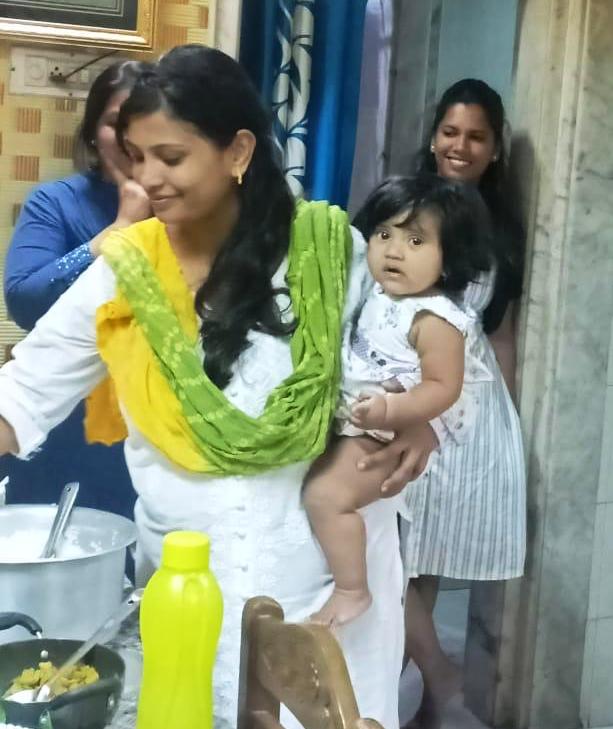
Last week we heard from five women who chose to become stay-at-home-mums (or work-from-home-mums) because they believed it was the best decision for their families. They faced misunderstanding and criticism, but that didn't stop them.

But we've all heard plenty of stories about the struggles and challenges of full-time motherhood. Isn't it boring, tedious, frustrating, mind-numbing? How could anyone be happy when they have the option of living like a grown-up outside the home, relating to other adults, instead of cleaning up after toddlers for the hundredth time? Do they regret the decision made in a more idealistic frame of mind? How do they survive the hard days?


Let's hear from the mamas.

Anna*, mother of two (6yo and 1yo), says 'bored' is the wrong word, when there is always one more thing to accomplish to make a house a home. But she acknowledges that not all days are not happy or easy.

"There are plenty of frustrations I have to deal with: my younger one can cry her lungs out till she gets her way, my older one has never been so stubborn, he just doesn't want to do anything on his own, so I'm trying to feed, bathe, and do many more things for both of them."

"However, thanks to the support of my family I have survived quite well. Many hard days are wiped away with a smile, hug and kiss from my kids. All the painful days are just a blur and the happy memories are the ones that I believe will stay with me for a lifetime. I am so happy I took the decision to be a full time mom. I never had the joy of seeing my older son grow up. I only got to see the photos and videos. But now with my younger one I get to see each day as she discovers new things, tastes new food, does her first of everything. This joy is unimaginable."


Kiersten (mother of a 5mo) shares that her expectations of productivity had to change once she became a SAHM.

“I have to remember it’s okay if I don’t get everything (or anything) marked off my to-do list. I don’t like to be idle or feel unproductive so I make a list of things I can do during the day to keep the house running. But taking care of a child is a full-time job already. Some days she requires more attention than others, which means I don’t always accomplish everything I set out to do."

Another struggle for SAHMs is that it can get a bit lonely sometimes. Kiersten experiences this but is trying find ways to meet that need. "I try to make sure to call my friends and family when getting out of the house isn’t possible."

She realizes that it's easier on both her and her baby when she just stays at home most days. "My daughter is starting to establish a nap/feeding schedule, and when it gets disrupted by errands, the rest of the day is difficult. So, I honestly don’t go out often during the day because it’s just easier to meet her needs at home (and take a nap myself, if I’m lucky!) I’m never bored, though. There is always something to do, and I find so much joy in teaching my daughter about the world and watching her learn and explore.”

Adele, mother of two (6yo and 8yo), shares, "On good days, I'm very happy with my decision. On bad days, I sometimes allow myself the momentary illusion that everyone would be happier if I was out of the house and out of their hair and we had more money to go to nicer holidays. But then I immediately remember that that's not true at all. Break over, back to mommying."


For Venora, mother of three (6yo, 4yo and 10mo) too, there are mostly ups, and occasional downs and moments of doubt. "I am happy on most days. Yes, there are days when I see my former colleagues in VP roles and settled abroad or at fancy holiday destinations and I wonder - 'what if it had been me'. But the next moment I look at all the small hands and feet around me, the fun they're having, their angel-like innocence and happy faces and then, I don't regret anything!"

But the struggles are real. "The struggles are plenty especially on sick days. My husband and I live alone with the kids. So when he leaves for work in the morning, it's all me."

How does she survive?

"Crying to Jesus! Prayer, worship, praying in tongues, more prayer. My kids have seen me break down and cry out in the spirit.. They have seen me at my most vulnerable and they know they should do the same - turn to Jesus. Now I couldn't guarantee that they'd have learnt this if I was someplace working dawn to dusk just to earn a fat salary and not be physically around them to show them how life must be lived for real."

Venora feels that her full-time presence with her two older sons until the age of 5 has made them great examples for their new baby sister. They are happy to entertain her if Venora is not around for a couple of hours. She also feels having several children has made SAHM life more fruitful, beautiful and even fun.

"My friends fear that having more kids means dividing your time but that's not true. You don't take away individual time from each one, you multiply love! Because look at the amount of love each one is receiving now! There's more to love, help around and yes how can I forget - the advice! The kids love to give advice and it's all mostly great!"


Jeanne* (mother of a 2yo and 9mo) is happy with her decisions because she feels that she knows her kids best. "I try to raise them as best I can. No one other than me (or my husband) is going to be this invested in them. And I love watching them grow, experience the world, and delight in little things. I used to get bored and frustrated when I didn't have time for myself. My husband and I instituted 'me time' once a week (or so) where I do the creative things I love to do and which make me feel fulfilled, or make an effort and go out and meet a friend for coffee or dinner (which feels great but happens a lot less often because it takes mental energy to make plans and decide to dress up and go out). Also, being a part of my Christian community draws on other talents and fulfils other needs."

One of the big unacknowledged struggles of SAHMs is that the work they do is not considered as valuable by society as other work because it is unpaid. Subconsciously, most people need to attach a monetary value to anything to believe that it is worth it. The more one is paid, the more important one is deemed in the eyes of society. Where does that leave 24 hour working moms who don't get paid, and in fact, need their spouses to be the earning member of the family? Or the work-from-home mums who take a significant pay cut in order to be at home?

SAHMs and their spouses need to develop a thick skin and a willingness to be counter-cultural.

Jeanne says, "I struggle with feeling valued when most people I know consider working mothers the norm, and don't think about why you may not want to return to work six months or a year after having a baby. But my Christian community and my family keep me grounded."


There is no doubt that being a SAHM is in many ways a sacrifice. But it is a sacrifice freely chosen and made sweet by the knowledge that it is bearing fruit in the life of the family. Like Mother Teresa, these moms could say, 'I have found the paradox, that if you love until it hurts, there can be no more hurt, only more love.'

*Names changed.

Related Reading

The SAHM Series: Why do Stay-At-Home-Mums Stay at Home? (Part 1 of 3)

The SAHM Series: Tips and Advice from Stay-At-Home-Mums (Part 3 of 3)

All posts tagged 'Family'

Tuesday, 24 September 2019

The SAHM Series: Why do Stay-At-Home-Mums Stay at Home? (Part 1 of 3)


A generation or two ago in India, most mothers were stay-at-home-mothers (aka SAHMs). It was the exception for women to work in an office or workplace after being married. In fact, even today, many Indian women don’t have the option of work outside the home, and are expected to cut short their studies or not have any career goals or dreams because the only permissible role of a woman is that of a wife and mother.

But in many cities nowadays, the reverse is true. It is no longer socially acceptable in many circles for an educated woman to leave her full-time job and be at home with her children. It is seen as backward and a waste of potential, especially since a double income brings with it a sense of financial security in an expensive world. With grandparents usually offering free childcare in India, it seems logical to have both spouses working full-time outside the home.

In many households, women are expected to be up early to handle all the household chores, cooking and cleaning, before leaving for work, and then to return home and continue the routine. ‘A woman’s work is never done’ is never truer in such homes. In other homes, especially in the upper middle class, families are able to afford a maid, and spouses are learning to share the remaining chores and parenting responsibilities.

In the current climate, there are still some women who have chosen to leave their jobs and work part-time from home or focus fully on their home and young children. I have interviewed five young women to hear more about their motivation and stories.

Jeanne* worked as an interior designer at an architecture firm for over five years. She and her husband hope to have several children, and they did in fact have two daughters (2yo and 9mo) within their first three years of marriage. Jeanne realized pretty soon that she didn’t want to be away from her children when they were very young, so together with her husband, she made the decision to leave her job.

Few people seemed to understand her decision. “The world isn't very appreciative of stay-at-home mothers. I get support from family, my Christian community and close friends. From everyone else, there is a lack of understanding. “She's small now, you'll go back to work when she's older of course.” “You're wasting your talents.” “Don't you get bored sitting at home?”


Anna*, mother of two (6yo and 1yo), worked as a Chartered Financial Analyst (CFA). After finishing her studies, her only dream was to work with the best finance companies in the world. She achieved her dream, and worked for eight years at a very demanding job with client calls starting late evening and going into the night. “I never thought that I would give it all up to care for my children. It took me some time to realize that I had my life figured out all wrong. It was the toughest decision I have ever taken. Some may assume I don't have motherly feelings, but after I had studied so hard, managed to get a good finance job and risen to a good position, it was really hard to let go.”

But Anna was not happy. She could see her son for only an hour on weekdays, her parents were getting burnt out, and she was conscious of the fact that he was her child, not theirs, to care for. Her son would sit outside the bathroom when she went to freshen up after returning from work. She had no time to take him down to play and no time to spend with her spouse. All these factors finally mattered much more than her professional achievements.

It was a personal decision that Anna and her husband made together, after careful considering their financial commitments. They felt that if they could sacrifice a few pleasures and manage to make ends meet, having more time for their home and kids made it worth it. Her decision was reinforced by her Christian faith and certain bible verses, as well as the encouragement of other mothers who shared their personal experiences of how their home was more organized and the kids were happier since they chose to be at home.

Everyone had an opinion about Anna’s decision. “Putting down my papers didn't come without its share of criticism. Right from my maid (she was afraid she would lose her job) to my managers, everyone had something to say. I got the most enticing offers. ‘Oh, why don't you take a two or three month break in service, or you can work from home for a few months?’ I didn't get these offers when I had to leave baby and join work full-time. I had people even asking me if I was mad to give up everything at this stage after achieving so much.”


Venora, now mother of three (6yo, 4yo and 10mo), quit her full time job as a learning and development professional while expecting her first baby. “My mother was a SAHM and I think that played a pivotal role in my wanting to be at home to see all my child's firsts.”

She continues to freelance professionally and take up part-time projects when possible, keeping the kids' schedule in mind. “I decided to take up training projects when my second son was about six months old. I remember taking him with me to Dubai for a two week training once. The Lord provided for a baby sitter there and gave me the courage to leave him with a lovely aunty every morning. But it broke my heart because I could hear him cry till I got to the main road every day. His teary eyes would greet me on my return. Those two weeks were traumatic on a personal front yet fulfilling professionally. My husband and his parents cared for my older son at home, and we would video chat every day. But I didn't want to go through that very often.”

Venora and her husband were able to make the decision for her to be a SAHM because they have also chosen to live very minimalist lives. “Whenever we needed extra cash, either one of us landed an extra project or there's been some opportunity or another. God provides.”


Initially as they prioritized family life, Venora and her husband had more critics than supporters, but by the time their third child came along, they had more admirers. They met people who told them they decided to have a second baby only because they had their third.

Adele, mother of two (6yo and 8yo), worked in the NGO sector. She left her full-time job even before she had kids, not because anyone asked or expected her to, but because she believed that was what God was calling her to do so. She chose not to return to full-time paid work in order to prioritise the spiritual and emotional needs of her family. “In my opinion, my family’s needs can't be met by delegating care-giving to a paid employee, however skilled or experienced they might be.”

Reactions varied from judgmental silence, to weird assumptions or questions, as well as the glorification of being a full time mother. Adele would just laugh them off and get on with living her life.

Kiersten (mother of a 5mo) is the only American I interviewed, and in many ways the situation seems very different for her. She received support and encouragement from her social circles to give up her freelance work as videographer/editor/public relations assistant after the birth of her baby. It made more sense financially for her to be at home as childcare in her part of the US is expensive. “My husband is my biggest champion and always lets me know that if I change my mind and want to go back to work, he is absolutely on board.”

*Names changed.

Related Reading

The SAHM Series: Are Stay-at-Home-Mums Happy? (Part 2 of 3)

The SAHM Series: Tips and Advice from Stay-At-Home-Mums (Part 3 of 3)

Tuesday, 17 September 2019

Twenty Secret Tests to Give Your Boyfriend


So you're dating, but you're not sure whether this guy is husband material? Fear not, there is a way to find out what he's really made of. Spend the rest of your relationship laying secret tests for him to decide whether to move to the next level.*

1. The Judgy McJudgy Test: Tell him your worst sins and watch for the telltale silence and withdrawal.

2. The Slob Test: Leave a dirty dish in his sink and see how long it lies there.

3. The One-upmanship Test: Mention your past achievements and see if he interrupts to insert his own.

4. The Perfectionist Test: Sing a love song to him really loud and off-tune to see if he’s tactful and kind enough not to stop you immediately or to stick his fingers in his ears.

5. The Handkerchief Test: Break into tears or better yet, get a heavy cold to find out if he’s a true gentleman who carries clean handkerchiefs with him to offer those in need.

6. The Patience Test: Make him wait while you change your outfit five times while telling him 'Just two more minutes' multiple times.

7. The Chauvinist Test: Ask him to make you a sandwich and check if he seems surprised or outraged.

8. The Shallow Test: Never wear make-up to find out if he thinks you're beautiful just the way you are.

9. The Phone Test: Hide his phone for a few hours to see if he is addicted.

10. The Fatherhood Test: Thrust a crying baby into his arms unexpectedly to see if he’ll be an amazing father.

11. The Fortune Hunter Test: Tell him you won the lottery and you haven't made a will. Check how fast he proposes.

12. The Gullible Test: Tell him you gave it all away to the first person who asked. If he believes you, either he doesn't know you very well, or you're a saint. Oh wait, saints don't lie about lotteries.

13. The Temper Test: Trip a server at a restaurant so that he/she drops food all over his favourite shirt to see if he has a bad temper.

14. The Anti-Science Test: Casually point out your baby vaccination marks on your shoulder to find out if he is an anti-vaxxer.

15. The Conspiracy Theorist Test: Mention that you’d like to ‘travel around the world’ to check if he’s secretly a flat-earth conspiracy theorist.

16. The Vampire Test: Cook him a great Italian meal, add a lot of garlic to everything and sprinkle holy water in his drink. Also gift him a crucifix and see if he recoils.

17. The Mass Murderer Test: Search his room for a bag of mementos or newspaper clippings to rule out the possibility of him being a serial killer.

18. The James Bond Test: Take apart his watch to find out if it's really a high-tech communication system he uses to facilitate his double life as a secret agent with a license to kill.

19. The Superman Test: Look at him with and without glasses to ensure he is not a secret superhero in disguise.

20. The Survivor Test: Steal his wallet, cards, keys and vehicle and leave him stranded in the middle of nowhere to see if he knows how to survive in the wild (essential husband and father skills).

*Are you crazy? What kind of manipulative person are you anyhow? Stop laying traps. Instead be honest and communicate. Although there's nothing wrong with being observant, while keeping in mind that nobody is perfect. Also, if you think this is funny, imagine how you'd fare if someone gave YOU these tests. Yeah, not so cocky now, are you, Ms. Impatient Vampire Slob?

Click on this link for more lighthearted posts from the past seven years.

Like my blog? Sign up as a patron for just Rs 200 or $3 per month and receive my ebook and a weekly behind-the-scenes video! Email solosenilejive@gmail.com or visit my Patreon page to know more.

Tuesday, 10 September 2019

The Burdens God Didn’t Ask You to Carry


"Woman carries bundle on her back in Nepal" by World Bank Photo Collection is licensed under CC BY-NC-ND 2.0

1. Constant self-doubt:The unexamined life is not worth living.’ It is good to pause and take stock of one’s life regularly, holding it up to the light of God, and making changes when necessary. But living in a constant state of unsureness, second guessing every decision, wondering if there’s another life you should be living, comparing your life to others’, this is the devil’s tactic to prevent you from ever fully living the life you have been given. This is it. This life right now, these people, the tasks of this day. Throw away the self-doubt and embrace this life.


2. Unforgiveness: I asked people on Facebook, “What’s one thing you believe strongly but find difficult to live out yourself?” Surprisingly, many answered ‘Forgiveness’. In some way, holding on to anger and resentment can feel like justice. Being asked to forgive may feel like being asked to deny the guilt of the other person, or the seriousness of their offence. But forgiveness is not saying that.

Forgiveness is the freedom for YOU to move on. Unforgiveness and resentment is a burden that will not only slow you down but eventually consume you. You can draw boundaries so the other person doesn’t have room to hurt you again, but you can rid yourself of the bitterness by praying for them and surrendering them to the mercy and justice of God every time you think of them.

3. Other people’s bad decisions: Do you REALLY love someone if you don’t stay awake worrying about their life, decisions and weaknesses? Hi, that’s not real love. It’s normal to be concerned, but then discern if you are being asked to do something about it. Talk to them, listen to them, give some judicious advice and then realise they have been given freedom and the responsibility to make their own choices. You are not their saviour or fixer. Pray fervently for them, offer up your sufferings or sacrifices for them, and entrust them to God.
4. The fate of the country/ Church/ world: Now I’m not saying you don’t have your role to play. I’m not advocating apathy or despair or blame-shifting. But your role and responsibility encompasses only the things that are actually under your control. Often it means being faithful in little things, being the change you want to see, and praying a LOT. But that’s it.

The Holy Spirit may prompt you to start something new, do something different, but guess what He’s NOT asking you to do? He’s not asking you to do everything, change everything, and then stress out because you suddenly realise you CAN’T do everything and change everything.

5. Having your life together all the time: Everybody has bad days. You are not the only one who wasted hours binge-watching Netflix, eating junk food, staying up too late and procrastinating on your very urgent tasks after a bad mood/PMS/family fight/uncovered old wound/loneliness. Pick yourself up and start again.


You’re not the only one who has acted bad-tempered or irritable all day, or found yourself in the middle of a gossip session before you knew it, or started crying for no good reason, or been a far less than cheerful giver, or made a less than tactful comment. Apologize, and move on.

If your life is NEVER in order, then it may be good to talk to someone, go to a counselor, or get a spiritual director, and make some major lifestyle changes. But once in a while is not the end of the world.

Okay, so which of these burdens are you carrying? Hand them over and start a new day with freedom and a lighter step. God’s strong shoulders are willing and able to carry them, but it’s your job to let them go.

Related Reading

The Antidotes to Anxiety

Thursday, 5 September 2019

Ask Sue: How Does One Decide When to Jump Into Online Comment Threads?


One of my patrons recently texted to ask this question:

How does one discern when to engage in online discourse? A friend saw an article posted on a neighbourhood page that seemed discriminatory to Muslims. She felt conflicted: posting a well-intentioned and informed contrary opinion would not change anything. But if she did say something, she would be defending her Muslim neighbours who would feel attacked by the article. She wanted to bring some objectivity to the discussion, but was worried about instigating even more inflammatory remarks making things worse for her neighbours. Any thoughts?

Ah, comment threads, how I love thee. Not. For someone like me who loves and values truth and accuracy, but also hates conflict, online discourse is a tricky place to be. I’ve only written about reading comment threads. What about participating in them? (This includes Facebook, Twitter, Whatsapp groups, etc.)

Full disclosure: I almost never comment on online threads. But I admire those who do so courteously.

Still, here are a few thoughts and suggestions in case you are ever wondering whether or not to jump in:

Check your motives: If you’re just being defensive, trying to prove you’re right and someone else is wrong, close that app and go read a book. Proving a point rarely seems to make a real difference. Win an argument, lose a soul. But if, like my patron’s friend, your motive is to speak up for those who are being attacked or misunderstood, or to help people to see and consider the truth, then proceed further.


Check your emotions: If you are burning with anger or resentment, furious at the stupidity and ignorance of the other commenters, take a break before chiming in. How we say something is as important as what we say. If you’re angry, you’re far less likely to be kind or charitable. Being passionate about truth doesn’t require you to be rude or snarky. Remember that no human being is the enemy, no matter how erroneous or harmful their beliefs are.


Pause and say a prayer: This is one of the typical situations that the Holy Spirit was given to us for. This is not always a clear black and white situation. In some cases, it is better to be quiet, while in others, a prophetic voice is needed. Sometimes it may be your voice, sometimes it may be someone else. Don’t be afraid to be a prophet: The world needs prophets, speaking inconvenient truths. It’s far easier to say the things everyone already agrees on, than to voice an unpopular opinion. Your voice may make all the difference. But how, you may ask. Sometimes it is pretty obvious that the other people on a thread have already made up their minds. What’s the point of saying anything?

You’ve forgotten about all the silent observers sitting on the fence, people who have not yet made up their mind, but are open to hearing from both sides. I can’t tell you how often my mind has been opened to a new perspective by a charitable voice continuing a discussion. How many others are also watching!

When a reasonable voice is heard, people of goodwill consider new perspectives. Never underestimate the power of planting a seed. Most of us are lifelong learners, but we learn based on what we hear, what we see, what people say, how they say it, and how convincing their words are. If no one is willing to speak up for the truth, how can we blame people for being brainwashed by a lost world?

Acknowledge common ground: Usually there is something that you can agree on, and it's helpful to listen for any elements of truth in the other person's words. Acknowledging those elements shows the other person that you are seeking truth, not vindication.


Count the cost: Be aware that some people might attack you for your beliefs, however charitably spoken. If you are still convicted that you need to speak, do so, but don’t remain in a toxic environment. Go play with a baby, cook some dinner, hang out with a friend, or go for a walk. Don't be afraid to bow out when you need to, especially if continuing the discussion is causing you anxiety or interfering with your ability to love and be present to the people around you.

Surrender the outcome to God: You may or may not see visible fruit online. But if you were obedient to the promptings of the Spirit, if you were charitable and kind in your words, and if you remembered to say a prayer for all those involved in the discussion, God is more than able to multiply your little offering. It’s not your job to convince people or save their souls, it is God’s. Remember that you’re not God, and let go of the need for visible success.

Have nothing to do with stupid and senseless controversies; you know that they breed quarrels. And the Lord’s servant must not be quarrelsome but kindly to everyone, an apt teacher, patient, correcting opponents with gentleness. God may perhaps grant that they will repent and come to know the truth. 2 Timothy 2: 23-25

Monday, 26 August 2019

Practical Suggestions for How to Live Gospel Poverty


"It's ridiculous how wealthy those people are. They live in mansions, own several cars, and spend crores on weddings." You know, practically everyone compares themselves with someone wealthier and feel a sense of self-righteousness about how wasteful THEY are compared with us. But most of you reading this blog are probably privileged compared to the vast majority of the world and especially India.

- Are you fairly fluent in English? Many jobs and opportunities are open to you.
- Do you have an income big enough to be able to spend on little and big luxuries like eating out, going on holidays and buying non-essentials?
- Have you had the opportunity to travel abroad?
- Do you have a secure job and a steady income? Do you have savings?
- Do you have free time that allows you to spend hours on social media every day?
- Have you got an education or skills that enable you to earn money?
- Do you have friends and connections in the upper and upper-middle social classes?

Even if only some of these apply to you, you are privileged, and so am I. The point is not to feel guilty about our privilege - it is rarely helpful or productive - but to accept that we are indeed privileged, and therefore our conscience and our God expect us use our privilege well. 'From everyone to whom much has been given, much will be required.' Lk 2:48

So let's get down to it. What practical steps can you take to start embracing a life of Gospel poverty?

1. Ask God to open your eyes and open your heart: No one can force you to give up your privilege. You have to freely choose to detach yourself, and that is hard. I'd like to care less about 'stuff', but I love my stuff too much. But even wanting it is a great first step. God can work with that. Ask Him to soften your heart to those in need. 'Let my heart be broken by the things that break the heart of God.'

2. Get to know some poor people: Theorizing about 'the poor' doesn't change anything. Then Gospel poverty just becomes a quirky hobby like minimalism often appears to be. Start somewhere. Visit the home of your maid or watchman. Ask her if she knows anyone in need in her neighborhood. Ask your local parish if there is a family you can visit and adopt. Get to know them and their needs. Don't come in as a benefactor, but as a friend who is genuinely interested in them. Or get personally involved in a charity.


My group was once given a sum of money to give away, so I contacted a teacher at the school I was working with to ask if there were any families we could give groceries to. The teacher told me about students who couldn't afford three meals every day, and sometimes drank a glass of water in the night instead of eating. It shook me. That's what my little luxuries were worth to someone else.

3. Go through your stuff: Pull everything out section by section, and ask yourself if you have used each item in the past year, and if you really even need it. It's amazing how may things we keep just because we think we MAY use it sometime. If you're not sure, put the maybe items in one area, and check again in a few months if you need them. Regularly make bags of giveaways and connect with someone who serves the poor directly. (Don't put ragged or filthy or unusable clothes in there!)

“When someone steals another's clothes, we call them a thief. Should we not give the same name to one who could clothe the naked and does not?" Saint Basil


4. Start tithing: Set aside (at least) ten percent of your income to give away. If you find it hard to remember, withdraw it, put the cash in an envelope, and label it. Ask God to show you to whom you should give it. Part of it could be to your church or faith community, but don't forget the poor. When you tell God you're available and your stuff is His stuff, He will take you at your word.

5. Evaluate your spending habits: Start keeping track of how much you spend on luxuries. Snacks, eating out, clothes and shoes, books, alcohol, parties, make-up and other beauty products, fancy ingredients, phones... you know your own temptations.


It's not bad to occasionally splurge, but when luxuries become habits and needs, then you know it's time to cut down. Ask God, "Where can I simplify? What can I cut down on? What can I give up this month?" Give up restaurants and outside food for a month. Or anything non-essential. Then take the money you would have spent and add it to the Giving envelope. (Pro-tip: If you are an impulse buyer, train yourself to wait 24 hours before buying something you are SURE you need. Leave it in the online shopping cart and close the tab. Most likely 24 hours later you'll change your mind.) Stay away from places and people who tempt you to waste money. Replace them with simpler pleasures.

"Remember this: Whoever sows sparingly will also reap sparingly, and whoever sows generously will also reap generously. Each of you should give what you have decided in your heart to give, not reluctantly or under compulsion, for God loves a cheerful giver." 2 Cor 9: 6-8


6. Make a budget: Easier said than done, I can attest to that. But prayerfully plan for your month (with your spouse if you have one), and ask God how He wants you to be a good steward of what you have. Be responsible, but err on the side of generosity.

"At the end of life we will not be judged by how many diplomas we have received, how much money we have made, how many great things we have done. We will be judged by 'I was hungry, and you gave me something to eat, I was naked and you clothed me. I was homeless, and you took me in.'" Mother Teresa


7. Give away something you are too attached to: Ask God to show you if there is something that you love more than Him, more than the people around you. I often share about an inspiring young Catholic missionary I met who told me he lived by the philosophy "Never own anything you cannot give away." Our possessions start to possess us, as Father Dubay puts it in Happy are You Poor, so we need to be proactive in exorcising these demons.

8. Give to all who ask: Give something to all who ask, even if it's a smile and an acknowledgment (when you feel uncomfortable about giving to what seem like professional beggars). Be willing to lend when someone asks for help instead of viewing everyone in need with suspicion. It is not a sin to be in need. If someone asks if they can stay with you, be hospitable. Offer a glass of water to the salesman who knocks on your door. Lend your stuff to those who ask. Don't make it a big deal if someone loses or damages your stuff. It's just stuff. Listen to the person who seems like they need someone to unburden to. When you know you are not able to give any more, when you are stretched too thin, it's okay to say no (kindly). But most of us are capable of more than we think we are.

9. Start a Gospel poverty Whatsapp group: Connect with people who have the same heart and desire. Share the needs you come across, or the stuff you want to give way. Let's use networking to benefit the poor. Do a book study of 'Happy are You Poor'. Read the Letter of James together. Plan a pilgrimage to Kolkata to be inspired by Mother Teresa. Read her writings.

In the end, we will only keep what we give away. If you could look at the last month and weigh what you gave away with what you spent on yourself, would you have an uneasy conscience? If so, today is the chance to begin again. Jesus is waiting for us to cut through the layers of our own stuff, and meet Him in the 'least of his brethren'. 

Related Reading

My Forays Into Gospel Poverty

When I was about six years old, I got a pink silk dress for my birthday. I remember how it looked and felt. It delighted my soul. It wasn't brand new, but it felt new. Brand new clothes were very rare in my home. There were five of us, and not a lot of extra money. People regularly gave us bags of hand-me-downs which we counted as 'new' clothes and were quite happy to accept and pick through....

Not Just Random Acts of Kindness

...The other thing I decided to do was buy a few bags of non-perishable groceries, and give them away to people the Lord pointed out to me, or poor people I saw on the streets. Unfortunately I hadn’t considered that carrying extra bags of groceries around was not the most practical idea, especially since I tend to overload my little two-wheeler on normal rides anywhere. So I did carry one bag out with me once, didn’t see anyone, and just brought the bag back and left it at home....

The Two Big Missing Pieces of Our Catholic Faith

... But most of us want to remain in our comfortable bubbles, our social circles of equally privileged friends and family and communities. We do our bible studies and prayer meetings and conferences and retreats. And we give a small percentage, making sure that it will not affect our hobbies and lifestyles. We live in our (sometimes metaphorical) gated communities occasionally making a quick awkward visit to an orphanage at Christmas, and then rush back to our comfy lives and our ministry among those like us. Gospel poverty is for a select few, we say, like Mother Teresa....

Seven Ways We Made Frugality a Way of Life or Yes, My Family is Weird 

So nowadays everybody's all about making good use of our resources, caring for the environment, not wasting stuff, reducing one's carbon footprint, reduce, reuse, recycle, etc. They think this is a new concept. They haven't met my family. While our family is usually known as the 'crazy Christian family with five kids', most people don't know that we are also the Original Recycling Family....

Monday, 19 August 2019

My Forays Into Gospel Poverty


When I was about six years old, I got a pink silk dress for my birthday. I remember how it looked and felt. It delighted my soul. It wasn't brand new, but it felt new. Brand new clothes were very rare in my home. There were five of us, and not a lot of extra money. People regularly gave us bags of hand-me-downs which we counted as 'new' clothes and were quite happy to accept and pick through. The Indian custom of new clothes at festivals (Christmas for Christians) or at birthdays didn't make it to our home. We didn't think it necessary and were quite happy to have pretty and appropriate 'church clothes' wherever they came from.

But that silk dress was something special. I had a birthday party and wore the dress and felt every bit as special as a little birthday girl should. I hung the dress up in my cupboard, and treasured it as my own birthday-magic dress. The following December, my parents sat down the five of us to have a little talk. They told us about a family in the nearby slum they had visited.

"They have five children too, around the same ages as you all. But they live in a small one room house. They have much less than we have. Would you each like to select one of your nice outfits to give them as a Christmas gift?"

They gave us the freedom to decide what we wanted to give, and I remember going to the church clothes cupboard, and pulling out my pink silk dress. And I still remember the sense of satisfaction and joy that I got to give that special dress to some little girl who probably didn't get nice things very often. Did I regret it later? Did I miss that pink silk dress? Maybe. But I don't remember that part of the experience.

*********

When I was 24, I left my job to join a volunteer organization that focussed on evangelization and service to the poor. We were encouraged to find ways to live simply, and in solidarity with the poor. We fundraised our own salaries, and budgeted what we had to provide for our needs and give the rest to the poor. My first year was in the Philippines, and we had very little extra money. So my team mate and I ate canned tuna, rice and salad for most meals. Compared to the variety of food I had growing up, that was not the most interesting cuisine. But it was a small way to identify with those who had even less than we did. Over my nine years as a full-timer, I have usually cooked only vegetarian food at home (except when we had guests), rarely eaten at expensive restaurants, rarely bought new clothes or shoes, and took the cheapest transport whenever it was safe.

Outdoor tuition classes in the poor community we worked with in the Philippines

During my second year in the Philippines, my team bought a big sack of rice at the beginning of the month, and whenever anyone came to our door asking for help because their family had run out of food, we'd give them a bag of rice. One day we were low on funds and with not a lot of food in the house. A priest friend of ours turned up at the door with bananas, mangoes, oranges, a pineapple and eggs from a mass he had celebrated. An hour later our house was filled with our friends from the poor community we worked with. They had just taken their babies for doctor visits with some of our volunteers. We set before them fruits and egg rice, a feast provided by the Lord. We had little, but we always had enough.

I have always seen God provide me with much more than I have given away or given up. I have never bought a phone in my life. I have rarely paid for housing. I have always had appropriate clothes for fancy occasions.

********

I have not always been successful at living simply or being as generous as I should have. I have bought unnecessary things at times, and regretted it later. I have been affected by wanting to look as cute or as cool as my contemporaries and wasted money trying to achieve that. I have wandered through malls with hungry eyes, wanting more, more, more and thinking "I need that! And that! And that!" I have filled my Amazon cart with things that I 'need', and then realized later that I didn't really NEED them. But the Lord has been patient with me, and I have learned to be patient with myself.

But each time I have been obedient I have experienced a new freedom, a spiritual openness, and a connection with Jesus in the poor.

*********

Today's Gospel is about the rich young man who Jesus asked to sell all he had, give to the poor and then go follow Jesus. He turned away sad because he had many possessions. Most people interpret that reading to mean we shouldn't be too attached to material possessions. Have them, but don't be too attached to them. But Thomas Dubay in the book 'Happy are You Poor' says that maybe Jesus really IS calling all of us who claim to follow Him to ACTUAL gospel poverty, not just detachment from our stuff.


But he says Gospel poverty isn't what we think it is. It isn't deprivation of our basic necessities. It doesn't mean not enjoying the pleasures of life. If we would like 'the poor' to have all they need and more, then God, our loving Father wants that for us too. It doesn't mean wearing shabby clothes or shoes with holes. It doesn't mean we shouldn't own homes or invest money or throw parties. So what is it then?

Gospel poverty is a lifestyle through which all I have is at the service of God and His children; a life of downward mobility, where I choose to live more simply in order to be able to give away more; a life where I ask God to guide my decisions of how much I should keep, save, spend, and give away; a life lived closer to actual poor people, forming real friendships, instead of in a bubble of other people as wealthy as I am.

It's going to look different for different people. It's going to look different for the same people at different stages of their life. It's going to look different for people in different states of life, vocations, and with different responsibilities and demands on their life. But that shouldn't stop us from starting somewhere, and allowing God to move our hearts and influence our decisions about our money and our possessions.

Next week: Practical Suggestions for How to Live Gospel Poverty

For more stories of my experiences in the Philippines, sign up as a patron, and receive my ebook for free.